Eco-Friendly Cleaning: Why Family- & Pet-Safe Products Matter
Green cleaning isn't just a trend — it's a healthier way to clean. Here's why non-toxic products are worth it.
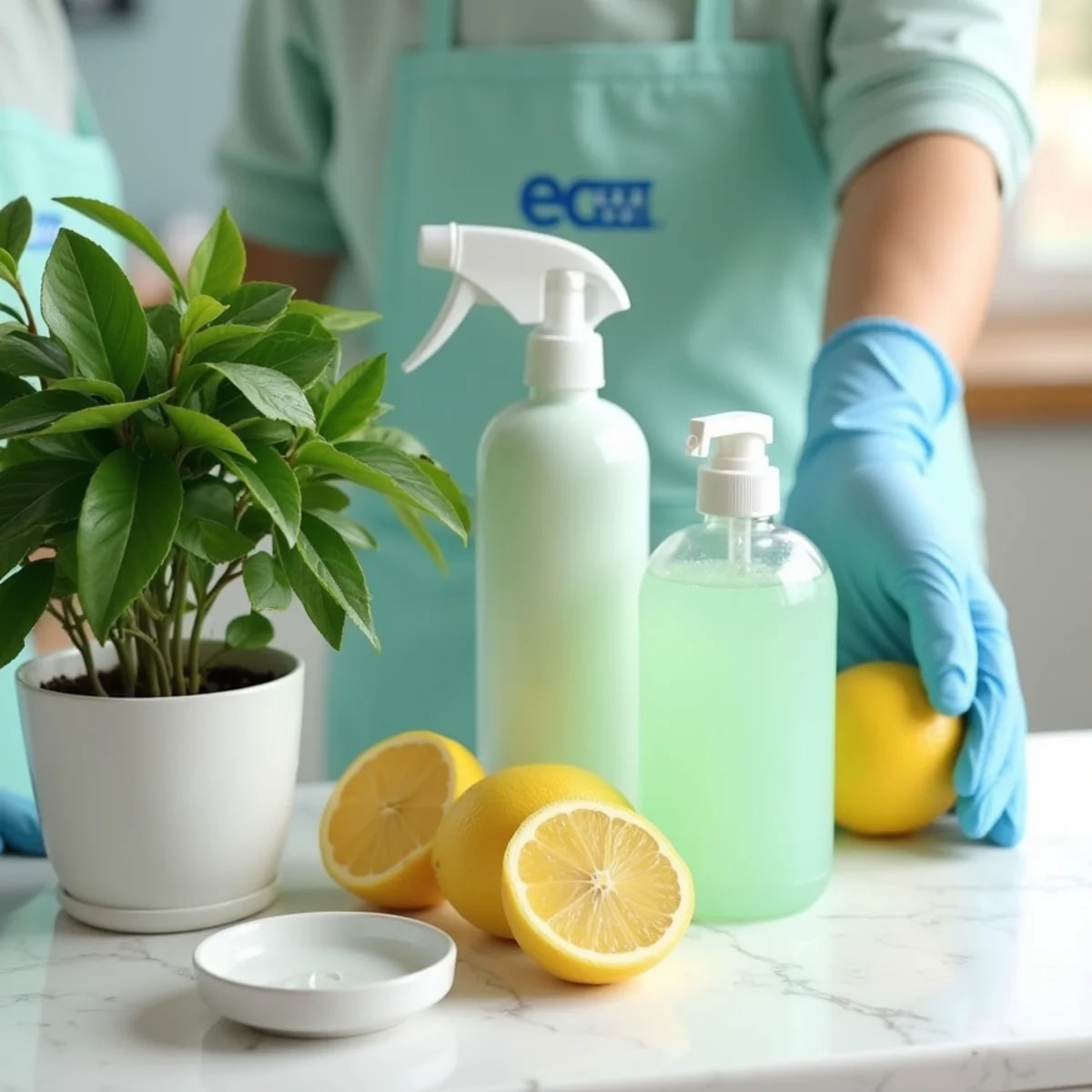
Eco-friendly cleaning matters because the products you use to make a home look clean can quietly make the air inside it harder to breathe. The EPA has found that indoor air is typically 2 to 5 times more polluted than outdoor air, and levels of volatile organic compounds (VOCs) can spike up to 10 times higher for hours right after you clean with conventional sprays and disinfectants. Family- and pet-safe products, made from plant-based, biodegradable ingredients, clean and sanitize just as effectively while sparing the people, pets, and lungs that live closest to the floor. Here is what non-toxic cleaning really involves, why it protects indoor air quality, and how to do it right in your own Toledo home.
What "Eco-Friendly" and "Pet-Safe" Actually Mean
Eco-friendly (or "green") cleaning means using products and methods that are non-toxic, biodegradable, and free of the harsh chemicals that pollute indoor air and waterways. Family- and pet-safe goes one step further: it means every surface a crawling baby, a barefoot toddler, or a paw can touch is cleaned without leaving behind residues or fumes that could irritate skin, eyes, or lungs. The two ideas overlap but are not identical, and the difference matters when you are choosing what to bring into your home.
Be aware that words like "natural," "green," and "eco" are not federally regulated marketing terms, so they can appear on products that still contain irritants. Genuinely safer products are identifiable by third-party marks such as EPA Safer Choice, Green Seal, or EWG Verified, and by a full ingredient list on the label. If a product hides behind "fragrance" or refuses to disclose ingredients, treat that as a red flag rather than a reassurance.
Why Conventional Cleaners Are a Hidden Indoor-Air Problem
Most homes are sealed up tight for energy efficiency, which is great for heating bills but means whatever you spray indoors tends to stay indoors. Conventional cleaners release VOCs and other fumes that build up in that trapped air, and the effects are cumulative rather than dramatic. You rarely notice them in the moment, but they add up across every wipe-down, every mopping, and every bathroom scrub.
Ingredients worth avoiding
- Ammonia and chlorine bleach, which release harsh fumes and become dangerous if accidentally mixed (the combination creates toxic chloramine gas)
- Quaternary ammonium compounds ("quats"), common in disinfecting wipes and sprays, linked to asthma and skin irritation
- Phthalates and synthetic "fragrance," hormone-disrupting compounds hidden under a single vague label word
- 2-Butoxyethanol and other glycol ethers found in many glass and multi-surface cleaners
- Triclosan and other antibacterial additives that offer little benefit at home and contribute to resistance
Who is most at risk
The people and animals closest to the ground absorb the most. Infants and toddlers breathe faster than adults and spend their days at floor level, where heavier fumes settle and where freshly cleaned surfaces go straight into their mouths. Older adults and anyone with asthma, allergies, COPD, or a compromised immune system react more strongly to airborne irritants. Switching to non-toxic products is one of the simplest, most immediate ways to lower the allergen and irritant load in a home, and many families notice fewer headaches, less sneezing, and easier breathing within days.
Why Pets Are Especially Vulnerable
Pets live the way we would never let a chemical-safety officer live. Dogs and cats walk across freshly mopped floors, then lie on them and groom the residue off their paws and fur. They are lower to the ground than we are, they breathe faster, and their livers process toxins differently, so a cleaner that merely irritates a human can genuinely sicken an animal. Cats are particularly sensitive because they lack certain liver enzymes that break down common compounds.
A few specifics every pet owner should know: concentrated essential oils, especially tea tree, citrus, pine, wintergreen, and eucalyptus, can be toxic to cats and dogs even in "natural" products, so use them sparingly and keep pets out of the room until surfaces are dry. Floor cleaners containing waxes, polishes, or glycol ethers are a common cause of paw irritation and stomach upset. Pine and phenol-based disinfectants (the ones that turn cloudy in water) are especially hazardous to cats. The safest rule of thumb: if a floor or counter is still wet, keep pets off it until it dries, regardless of what you cleaned with.
The Green Cleaning Toolkit That Actually Works
Non-toxic does not mean weak. A short list of simple ingredients handles the vast majority of household cleaning, and professionals lean on the same staples because they are effective, cheap, and safe around kids and pets.
- White vinegar (diluted 1:1 with water): cuts grease, dissolves hard-water and soap scum, and deodorizes glass, tile, and most sealed surfaces
- Baking soda: a gentle abrasive for scrubbing tubs, sinks, and cooktops, and a natural odor absorber for carpets and litter areas
- Castile soap: a plant-based all-purpose cleaner that lifts dirt from floors, counters, and hands
- Hydrogen peroxide (3%): a color-safe, EPA-recognized disinfectant that whitens grout and sanitizes cutting boards
- Enzyme cleaners: the only thing that truly eliminates pet-urine odor by breaking down the proteins, rather than masking them
- Microfiber cloths and a HEPA-filter vacuum: capture dust, dander, and allergens instead of scattering them back into the air
One important safety note: never mix vinegar with bleach or with hydrogen peroxide in the same bottle, and always test acidic cleaners on an inconspicuous spot. Vinegar can etch natural stone like marble, granite, and travertine, so use a pH-neutral stone cleaner on those surfaces instead.
A Room-by-Room Non-Toxic Cleaning Guide
Professionals clean top-to-bottom, so dust and residue fall onto surfaces you have not cleaned yet, and floors always come last. Here is how that plays out room by room with family- and pet-safe methods.
Kitchen
- Wipe cabinet fronts, backsplash, and counters with diluted castile soap or vinegar (skip vinegar on stone)
- Scrub the sink and cooktop with a baking-soda paste, then rinse
- Disinfect high-touch spots (handles, faucet, switches) with 3% hydrogen peroxide
- Clean pet food and water bowls daily with hot soapy water, where bacteria build up fastest
Bathrooms
- Loosen soap scum and hard-water spots with straight vinegar on tile and glass
- Brighten grout with a baking-soda-and-peroxide paste and a stiff brush
- Disinfect the toilet with peroxide instead of bleach
- Finish floors last with a damp mop and a drop of castile soap
Bedrooms and Living Areas
- Dust top-down with a dry or lightly damp microfiber cloth (ceiling fans, shelves, then surfaces)
- Vacuum upholstery, rugs, and pet-favorite corners with a HEPA machine to trap dander
- Deodorize carpets by sprinkling baking soda, waiting 15 minutes, then vacuuming
- Wash pet bedding and throw blankets in fragrance-free detergent on hot
Does Eco-Friendly Cleaning Really Work as Well? A Quick Comparison
The honest answer is yes for cleaning and sanitizing, with one caveat about disinfection. For everyday dirt, grease, soap scum, and odor, plant-based products perform on par with conventional ones. For true disinfection against specific viruses, look for an EPA-registered botanical disinfectant (thymol- or citric-acid-based) or use 3% hydrogen peroxide, which is EPA-recognized. Here is how the two approaches stack up on what matters most to families.
- Cleaning power on everyday messes: comparable — green products match conventional ones on grease, grime, and soap scum
- Indoor air quality: eco-friendly wins clearly — no VOC spike, no lingering chemical smell
- Safety for kids and pets: eco-friendly wins — no toxic residue on floors and surfaces
- Disinfection of pathogens: conventional has a slight edge unless you choose an EPA-registered botanical disinfectant, which closes the gap
- Environmental impact: eco-friendly wins — biodegradable ingredients that don't pollute Toledo's waterways or the Maumee watershed
Why This Matters More in Toledo Homes
Northwest Ohio's climate makes indoor air quality a year-round concern. Our long, cold winters keep homes sealed and furnaces running from November through March, trapping cleaning fumes, pet dander, and dust indoors for months. Spring brings heavy tree and ragweed pollen across the region, and Toledo's humid summers encourage mold and mildew in bathrooms and basements, tempting homeowners to reach for harsh bleach. Many homes in neighborhoods like the Old West End and Ottawa Hills are historic, with original woodwork, plaster, and hardwood that harsh chemicals can damage. Choosing gentle, non-toxic products protects both your family's lungs and your home's finishes through every season.
Cleaning That's Safe for Everyone Under Your Roof
At Wevessa Cleaners, family- and pet-safe cleaning isn't an upsell — it's how we clean every home, every visit. Our background-checked, trained cleaners use eco-friendly, non-toxic products throughout your house, so there are no harsh fumes waiting for your kids, your pets, or you when the job is done. We're fully insured, locally trusted with a 4.9-star rating across 130+ reviews, and every visit is backed by our 100% satisfaction guarantee. If we miss something, we make it right.
Ready to breathe easier at home? Get a free, no-obligation quote from Wevessa Cleaners and let us keep your Toledo home spotless and safe for everyone in it.
Frequently asked questions
Let Wevessa handle the cleaning
Spend your time on what matters — we'll take care of your Toledo home or office.